
Tour review · TOUR REVIEWS
Mayan Experience in Chichen Itza
Chichen Itza makes sense fast with the right guide. This private experience with Carlos keeps the story grounded in what you can actually see, and he uses his iPad to help you line up great photo spots. The one thing to weigh first is that archaeological site tickets and local transport are extra.
I like that you get practical support, not just speeches. The tour includes a water bottle, archaeological site maps, and you also get a free nursing service provided by the archaeological site.
Timing is straightforward, too. The tour runs during Chichen Itza opening hours from 8:00 AM to 3:30 PM, and it is offered in English, with confirmation at booking and service animals allowed.
Key highlights you can plan around
- Private group up to 15 means you are not stuck in a huge crowd shuffle.
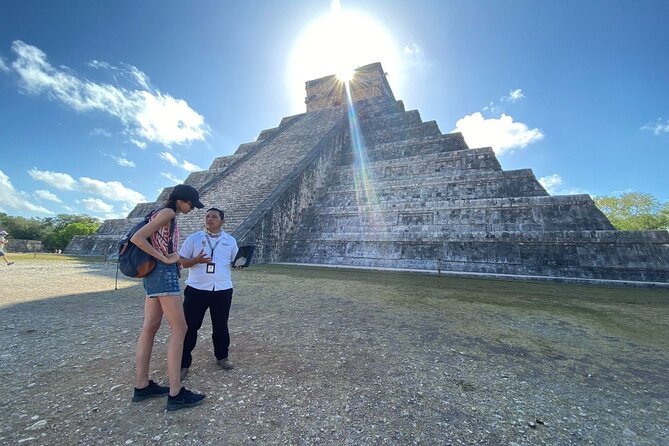
- Carlos and his iPad photo help point you to the exact spots for better pictures.
- Water, traditions, and customs set the tone before you go deep into carvings.
- Mayan calendar and astronomy on location ties the site back to the sky.
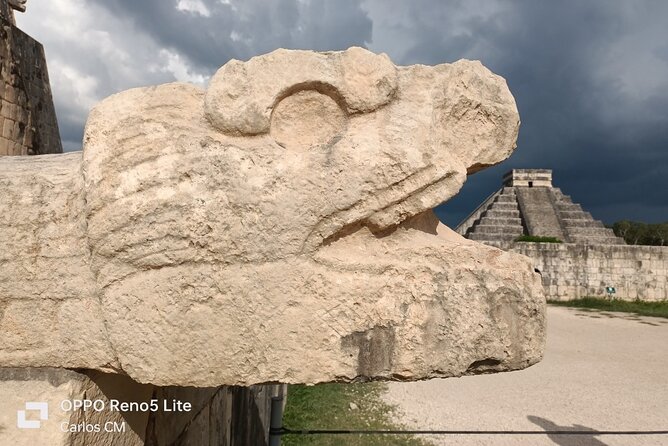
- Engravings on war and sacrifice give context to the heavy themes.
- Ball ritual traditions wrap up the visit with a theme you can connect to the site layout.
Why this Chichen Itza tour feels easier than going it alone
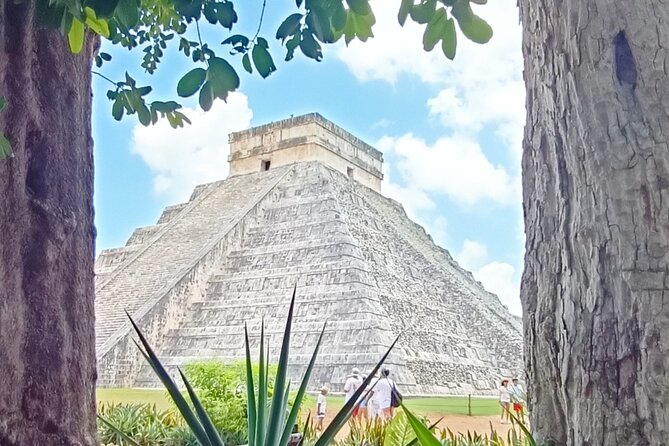
Chichen Itza can overwhelm you fast. There are major structures, lots of carvings, and plenty of people trying to get the same photos. What makes this tour work is that Carlos keeps you moving while still stopping to answer questions, so you do not lose the thread halfway through.
The other big win is how visual the guidance is. Carlos shares photo help using an iPad, and he is patient when you want to slow down, ask what you are looking at, or just wait for the right angle. That is especially valuable at Chichen Itza, where details can be small and it is easy to walk past meaning without noticing it.
This is also a true private tour. Only your group participates, with a group size limit of up to 15, so you get the benefit of guided pacing without the chaos of a mixed tour bus.
You can also read our reviews of more tours and experiences in Chichen Itza.
Price and logistics: what you pay, what you still need
The tour price is $92.60 per group, with a group size of up to 15, and it is offered in English. That structure can be a good value if you are traveling with other people and can actually fill the group limit, because the guide cost gets shared across the group.
But you should budget for the two major add-ons listed for the experience:
- Archaeological site tickets: MX$671.00 per person
- Public transportation: MX$500.00 per person
So the real comparison is not just $92.60. It is the tour fee plus site entry plus transport per person. The good news is that the tour itself already includes water bottle and archaeological site maps, so you are not doing extra shopping just to function during the visit.
Meeting point, timing, and how the 1 to 2 hours plays out
This experience starts at 97751 Chichén-Itzá, Yucatan, Mexico, and it ends back at the meeting point. You should plan around the site’s operating window, Monday through Sunday, from 8:00 AM to 3:30 PM.
Duration is listed as about 1 to 2 hours. That range matters because you want enough time to follow the stop-by-stop themes without feeling rushed out. In practice, that is a sweet spot for Chichen Itza: long enough to understand what you are seeing, short enough to keep the visit manageable.
The experience also depends on good weather. If it is canceled due to poor weather, you will either be offered a different date or a full refund.
Stop by stop at Chichen Itza: what each theme is really teaching you
The itinerary is built around themes, and that is the smart way to visit. Instead of just naming structures, the guide uses the carvings and features you can see to explain why the Mayans organized their world around time, astronomy, ritual, and power.
Here is how the visit flows, and what each stop is likely doing for you as a visitor.
Stop 1: Water, traditions, and customs that set the tone
The first stop focuses on the importance of water, along with traditions and customs. Starting here is useful because it puts everyday needs and social rules in the foreground. You are not immediately hit with symbolism or warfare scenes without a foundation.
You will also be hearing how cultural practices connect to how people lived and believed. That context helps you read the rest of the visit with less guessing.
One practical benefit of beginning with this theme: it shapes your mindset early. You start looking for meaning in the details, not just the biggest structures.
Stop 2: The Mayan calendar and astronomy made concrete
Next, the tour shifts into the Mayan calendar and astronomy. This is where Chichen Itza stops feeling like random ruins and starts feeling like a site built to track cycles and the sky.
Even if astronomy is not your thing, the point of this stop is to help you understand why certain features and alignments mattered. The guide’s explanations are meant to give you a framework so you know what you are looking for later when engravings come up.
If you want one takeaway from this section, it is this: you learn to connect the site to time, not just stone.
Stops 3 and 4: Engravings of Mayan astronomy, then war and sacrifice
After the calendar and astronomy explanation, you get information and engravings about Mayan astronomy. This is the moment where those abstract ideas get matched to what is actually carved or depicted on-site.
Then the itinerary moves into engravings about war and sacrifice. These themes are heavy. The value here is context. Instead of treating the carvings like spooky shock art, the guide helps you read them as part of a wider system of beliefs and social order.
A key consideration: if you want a light, purely scenic visit, these stops may feel intense. But if you want deeper understanding of the culture behind the art, this is where the tour delivers.
Stop 5: Trade and traditions, with prints that explain exchange and identity
The next theme turns toward trade and traditions, including information and prints of trade and traditions. This is a nice pivot because it balances the bigger ritual and power themes with something more human.
Trade is not just about objects. It is also about contact, influence, and shared ideas. When the guide connects trade to traditions, you start seeing the site as part of a living network, not a sealed-off monument.
This stop also helps you diversify what you notice. After carvings tied to ritual and conflict, you get permission to look for the quieter, everyday signals of culture.
Stop 6: War and sacrifice again, built into the bigger story
The itinerary lists war and sacrifice information and engravings again. That repetition is not necessarily redundant. In a thematic tour, coming back to a topic can mean the guide is reinforcing earlier ideas and showing how different carvings support the same interpretation.
If you like tours that make you connect dots, this structure helps. You get a second chance to ask questions and see how the guide’s explanation fits multiple features.
Stop 7: Ball ritual and traditions that tie the site together
Finally, the tour covers information and engravings of the ball ritual and traditions. This theme is often easier to remember because the ballgame is distinctive and recognizable as a cultural ritual, not just a sport.
By ending here, the visit closes with a clear thread. You leave with a theme that is both ceremonial and social, and it helps unify what you learned earlier about time, beliefs, and community.
Photo help that actually matters at Chichen Itza
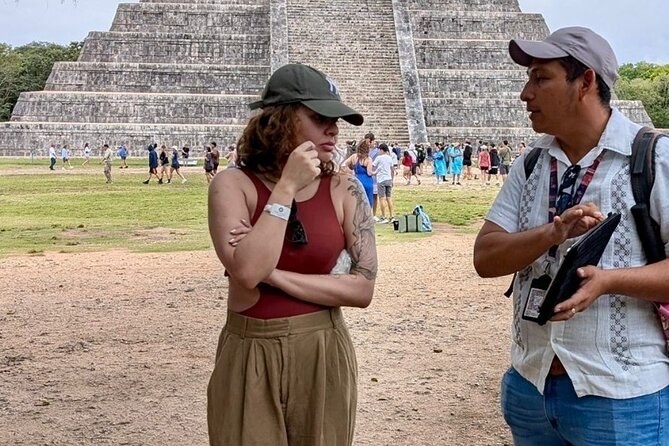
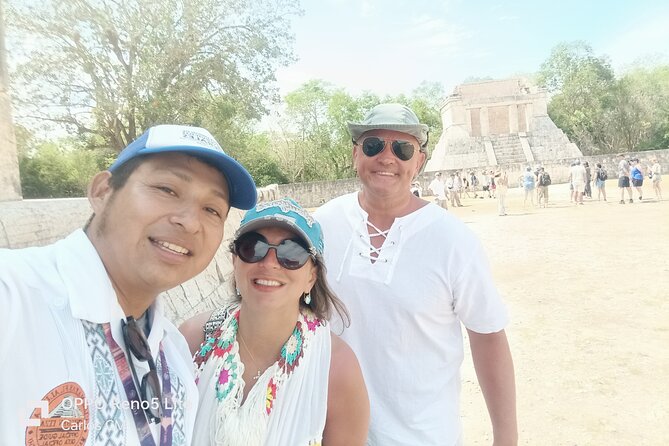
One of the most praised parts of this experience is Carlos’s photo guidance. People highlight that he knows the exact places for the best pictures and that he shares a lot of inside information using his iPad.
For you, that means you spend less time wandering, guessing, and re-aiming. You also get a guide who can explain what is visually important, not just where to stand.
I would treat this as more than a bonus. A good photo spot is usually a good learning spot. If you know where to look, the carvings and alignments make more sense when you are right in front of them.
What included perks are worth noticing
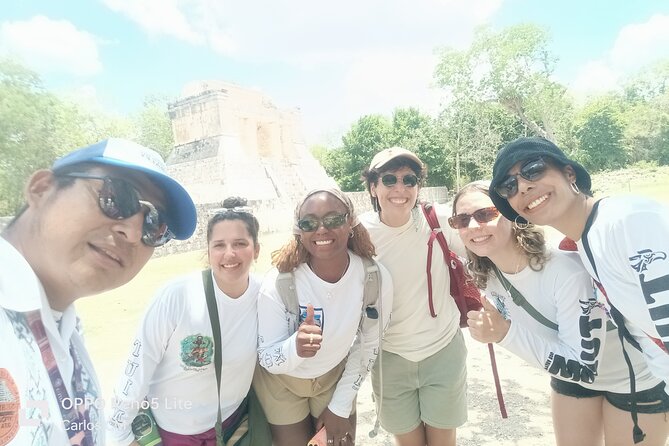
A few inclusions make this feel smoother on the ground:
- Water bottle included, so you are not starting the visit unprepared
- Archaeological site maps included, which help you follow the tour themes while you walk
- The tour includes the guide accompaniment for the whole experience
- A free nursing service provided by the archaeological site is included as part of the experience
That last item may be the surprise inclusion. If you are traveling with a baby or need nursing support during your visit, it is good to see that it is explicitly included.
And because the tour is private, the guide’s explanations can stay focused on your group’s pace, instead of getting lost in a larger itinerary.
Who should book this tour, and who might skip it
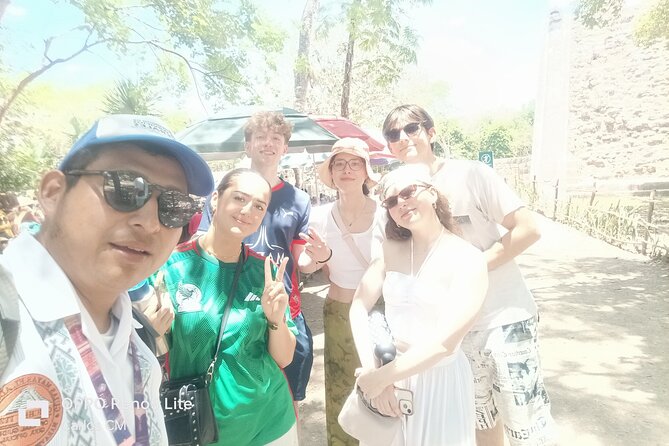
This experience fits best if you want:
- A structured visit that connects what you see to themes like calendar, astronomy, and ritual
- A shorter time commitment, since the tour runs about 1 to 2 hours
- A private group format up to 15, where you can ask questions and get answers
It also says most travelers can participate, and service animals are allowed. The tour runs during the daytime site hours, so it suits people who prefer visiting in the morning or early afternoon window.
You might consider something else if you only want a quick self-guided walk. The themes and stop-by-stop explanations mean you are paying for interpretation, not just access.
Should you book this Mayan Experience in Chichen Itza?
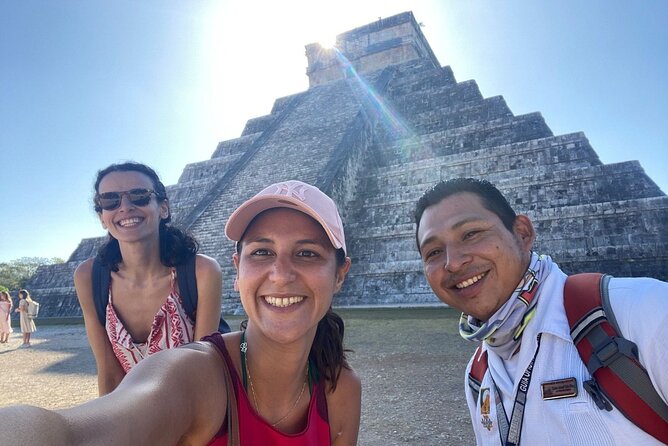
If you want Chichen Itza to feel understandable, not just impressive, this is an easy yes. The combination of a private group format, stop-by-stop cultural themes, and Carlos’s photo guidance makes the time feel purposeful.
Before you book, do two quick checks:
- Budget for the archaeological site tickets and local public transportation per person, since those are not included.
- Plan around good weather, since the experience depends on it.
If those boxes work for you, you are in for a guided, thematic visit that helps you read the site instead of just photographing it.
FAQ
What is the duration of the tour?
The tour lasts about 1 to 2 hours.
Is this a private tour?
Yes. This is a private tour/activity, and only your group participates.
How many people can be in a group?
The price is per group for up to 15 people.
What language is the tour offered in?
The tour is offered in English.
Are archaeological site tickets included?
No. Archaeological site tickets are not included and cost MX$671.00 per person.
Is transportation included?
No. Public transportation is not included and costs MX$500.00 per person.
What if the weather is poor or I need to cancel?
This experience requires good weather. If it is canceled due to poor weather, you will be offered a different date or a full refund. If you cancel or ask for an amendment, it is non-refundable and cannot be changed for any reason.
More Tour Reviews in Chichen Itza
Not for you? Here's more nearby things to do in Chichen Itza we have reviewed
Tour Reviews, compared.
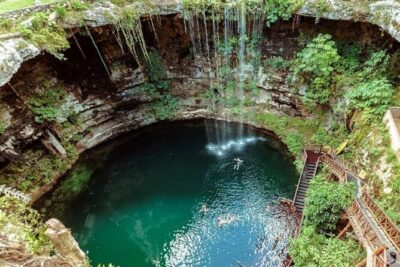 ★ 5.0Chichen Itza, Cenote, and Valladolid TourFrom $4524,293 reviews
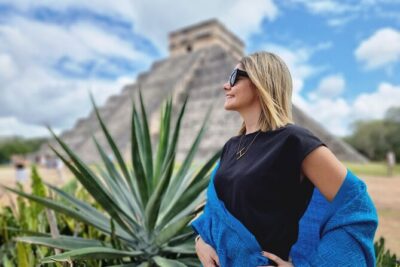 ★ 4.5Chichen Itza, Cenote & Valladolid Tour with Tequila and LunchFrom $3415,789 reviews
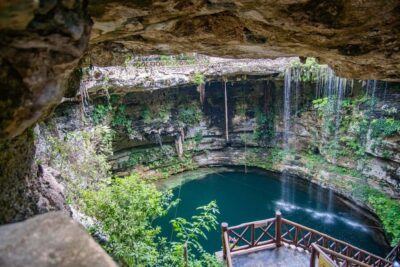 ★ 4.6Chichen Itza, Cenote & Valladolid Tour with LunchFrom $496,722 reviews
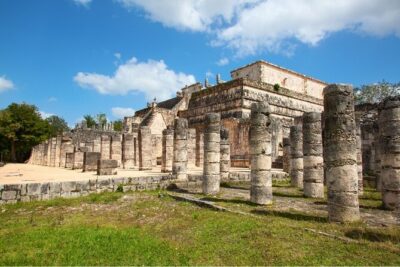 ★ 5.0Early morning Chichen Itza Tour: Cenote and Tequila TastingFrom $266,657 reviews
 ★ 5.0Private Roundtrip Transportation from Cancun Airport to Cancun Hotel ZoneFrom $945,086 reviews
 ★ 4.5Cancun ATV Jungle Adventure, Ziplines, Cenote and Tequila TastingFrom $494,873 reviews
 ★ 5.0Viator Exclusive: Tulum Ruins, Reef Snorkeling, Cenote and CavesFrom $1294,242 reviews
 ★ 4.5Chichen Itza Early Access All Inclusive: Hotel Pick up & All FeesFrom $1654,123 reviews
Browse the lists this tour appears in