
Tour review · TOUR REVIEWS
Chichen Itza: Self-Guided Tour with Audio Narration & Map
Chichén Itzá feels like a puzzle you can walk. This self-guided audio experience uses your phone’s location to trigger stories at major landmarks like El Castillo and El Caracol, with a suggested path so you are not wandering in circles.
I especially like the offline GPS setup. After you download (with a solid Wi‑Fi connection first), the tour is designed to work without roaming data, and the audio runs hands-free through your headphones.
The only real drawback is practical: you need a charged phone and you should plan for a fair amount of walking. If your battery runs low, you will feel it fast at a site this spread out.
Key points before you go
- Offline GPS audio so your phone can guide you without cellular data after setup
- Hands-free narration that starts based on your location, not button-presses
- A recommended route that helps you cover the essentials in about 2 hours
- Stop-by-stop context for major structures like the ball court and observatory
- Great value for $9.99, especially if you want to skip an expensive live guide
- Lifetime access with no expiry, so you can revisit the tour later
How GPS-triggered audio keeps Chichén Itzá from becoming a blur
Chichén Itzá can look overwhelming at first, because there is not a lot of detailed help on the ground. This tour solves that by pairing a map and GPS with audio stories. You stand in front of a point, and the narration starts automatically when you reach the right spot, so you get the “what am I looking at” moment without stopping to read everything.
The tour also lets you control your pace. You can pause, restart, and replay sections if you want to slow down for photos or take time with the smaller details. That matters here, because some parts of the site are easier to enjoy in the shade, and you might want breaks along the way.
For the audio to work as intended, bring headphones. The tour is designed to be hands-free, which means you do not want to miss cues. One simple trick I like is keeping one ear free only if you truly need it for safety, but otherwise headphones help you stay locked onto the stories.
You can also read our reviews of more guided tours in Chichen Itza
Price and value: what you pay $9.99 for, and why it feels fair
At $9.99 per person, you are paying for the guidance layer, not for entry. The tour does not include the Chichén Itzá admission ticket. You still need to buy entry to the archaeological site separately.
Where the math starts to make sense is the alternative. Hiring a private guide can be pricey, and group tours can be tight on time. This app-style guide gives you a “live-guide replacement” feel, with audio that keeps walking with you. It is also flexible, so you can step away from the main flow and come back when you want.
Another value point is that you get lifetime access with no expiry. That turns the cost into something you can spread across trips. If you return to Chichén Itzá later, you do not need to buy again.
Just be honest with yourself about expectations. The audio is designed to be clear and practical, not an academic seminar. If you want very deep explanations at every stop, you might find yourself wanting extra reading alongside the narration.
Getting set up at the start point, without panicking
This is a self-guided experience, and no one meets you at the beginning. Your starting point is listed at 97751 Chichén-Itzá, Yucatan, Mexico, and the tour ends back at the meeting point.
Before you arrive, you must do two things:
- Download the tour app while you are on strong Wi‑Fi or cellular.
- Use the password sent by email and text after booking.
The tour uses Action’s Tour Guide App. After download, you open the app onsite and launch the version with your planned starting point and direction. Then you head to the first story point, because the audio is supposed to begin from there.
Plan for a quick setup window. One common snag people run into is app access or login timing. If you can, do the download and password entry earlier in the day, not right as you are rushing into the site.
Device-wise, it is recommended that you have an iPhone running iOS 15 or later, an Android device running version 9 or later, or an iPad/tablet with GPS and cellular connectivity. If your phone is older or your GPS is unreliable, you may want to test it before you start walking.
Handicraft Market to El Castillo: your route in human time
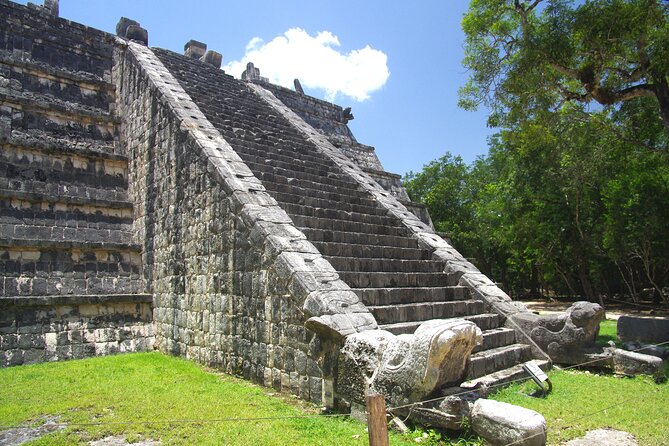
Your route begins around the Handicraft Market area. Even if you are not shopping, it is a nice buffer before the ruins, because you can orient yourself and start with an easy first story. The audio for this section is meant to warm you up with Maya context, and the route here is described as over 2 miles with many short stories.
Right after that, you will hit a stop tied to Guías oficiales de la Z. A. de Chichén Itzá, a station that basically acknowledges official guidance. It is not a requirement to hire a guide, but it is a helpful checkpoint. I like having a moment like this early, because signage at archaeological sites can be minimal.
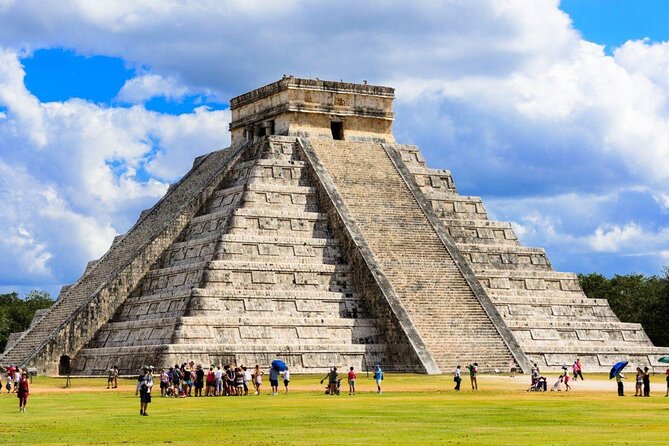
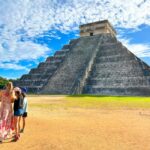
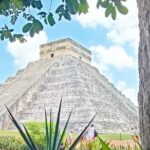
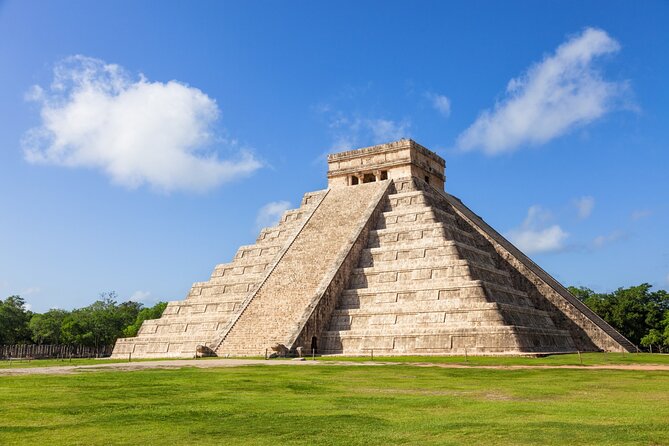
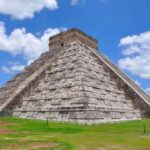
Then comes El Castillo, the most famous landmark here, also called the Pyramid of Kukulkan. The narration frames it as architecture built to honor the snake deity Kukulkan. You spend your time looking at the pyramid itself and learning how Mayan civilization is reflected in the design.
Two practical notes for El Castillo:
- Bring your camera, but expect crowd pressure, even if you are trying to avoid it.
- If you wander for photos or souvenirs, do not worry too much. The GPS is designed to bring you back to the trajectory of the tour.
Gran Juego de Pelota, Tzompantli, and the Eagles & Jaguars platform
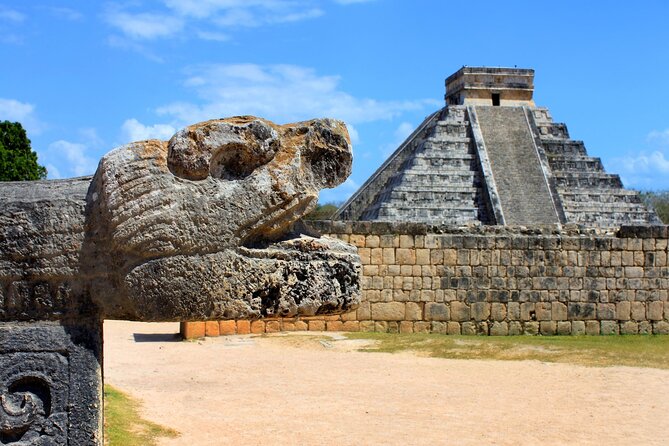
After El Castillo, the audio steers you to the ball court, the ceremonial spaces, and the carvings that turn stone into a story.
The first major stop here is Gran Juego de Pelota. The narration explains that the ball court is tied to Mayan culture and points you to sculpted reliefs along the walls. You are encouraged to look closely, because ball players become visible in the scenes. This is one of those moments where audio helps, because without context you might walk past the carvings and miss what they are doing.
Next is Tzompantli, literally a skull rack. The description is intense and specific: a platform that once displayed skulls from sacrificial victims, with warriors shown carrying human heads plus imagery including snakes and eagles. If you are sensitive to graphic themes, this is the stop to pace yourself. The narration gives the meaning, so you are not guessing.
Then you reach the Eagles & Jaguars Platform. Instead of a temple on top, it is framed as a flat stage for public viewing, likely used for ceremonies, dance, ritual, or speeches. I like this stop because it shifts the focus from monuments to how a crowd might have experienced public life.
A small drawback worth knowing: some people find the map slightly off and notice that audio can start just before they arrive at the exact point. If that happens to you, treat it like a teaser. You can still do the “wait, where are we?” moment and then line up your view when the audio matches what you see.


El Caracol: the observatory vibe, repeated where it counts
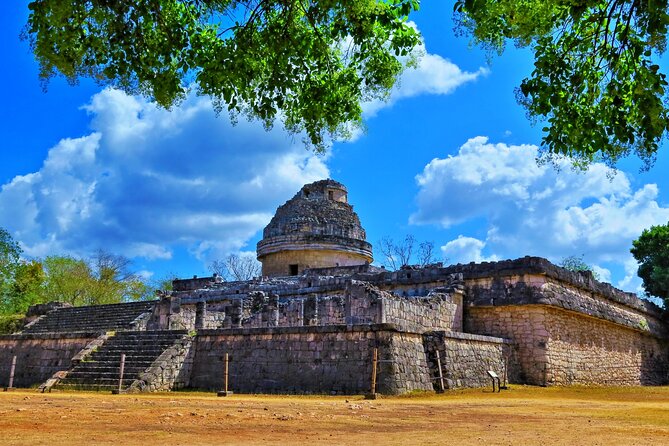
El Caracol is one of the most interesting buildings at Chichén Itzá. The narration ties it to astronomy, explaining that on top of the structure were remains of what was originally an observatory. From there, Mayans could watch the stars and use the movement of planets to infer things about the future.
You will see El Caracol appear more than once in the route plan, which sounds odd until you realize it is about placing you near the right viewpoint more than once. If the first pass feels rushed, you can catch it again later with a calmer pace.
This is also a good place to pause and look up. The building is cylindrical in shape, and your ability to visualize the observatory function improves when you take a breath and look from different angles.
Keep expectations realistic. This is a guided audio story in a public archaeological site, so you are not getting hands-on “science lab” explanations. But for understanding why this building mattered, the narration gives you enough structure to make your own sense of the stars, stone, and timing.
Chichén Itzá Yucatán overview, then Warriors and Las Monjas
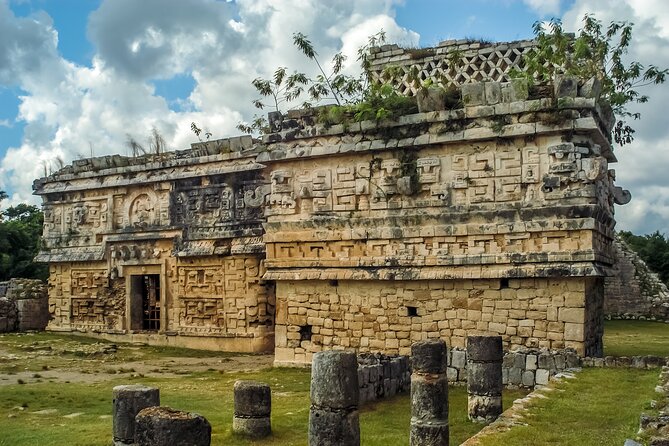
At Chichén Itzá Yucatan, the tour gives a longer overview segment. It frames the site as one of the greatest Maya centers in the Yucatán peninsula, with nearly 1,000 years of history. It also highlights the Maya-Toltec fusion, describing how Mayan construction techniques combine with elements from central Mexico. This overview section helps you connect the dots between buildings instead of treating each monument like an isolated postcard.
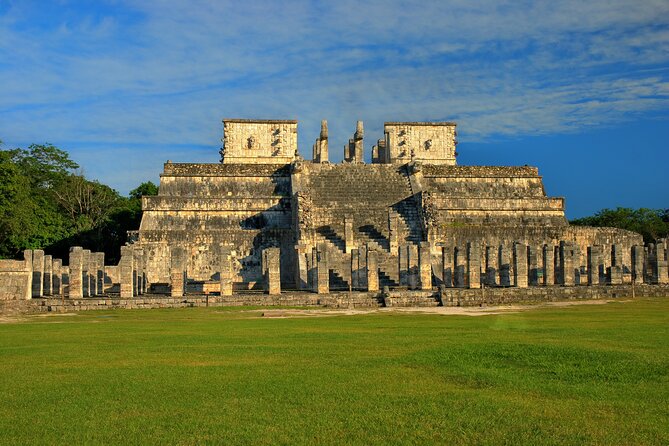
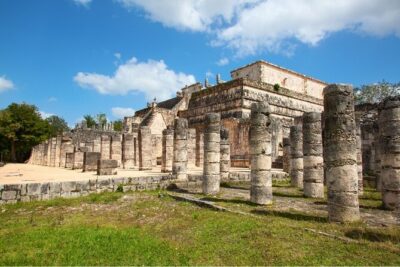
Then you move to the Temple of the Warriors. The narration describes it like a tiered, temple-on-top structure. The standout feature here is the columns, about 200, each with carvings of Toltec warriors in varying scenes. This is the stop where the architecture starts to feel like a whole cast of characters.
After that, Las Monjas (the Nunnery) comes into focus. The description emphasizes size and archaeologic significance, especially the huge number of texts inscribed into the walls, many mentioning a ruler named Kakupakal. If you like when stone starts to behave like written evidence, this is where you will perk up.
Two tips for enjoying these stops:
- Slow down before you enter the busiest viewpoints. The audio can help you “aim” your attention at the right detail, so you are not just scanning randomly.
- If you get ahead of the story, just stop where you are and let the audio catch up, or restart the current segment once you are in the right spot.
The Red House, Ossuary, and La iglesia: finishing with detail
Near the end of the route, you get a series of buildings that reward close looking.
First is the Red House, also known as the House of Little Holes because of the latticework near the top. The narration mentions the Mayan name Chichanchob and suggests it could mean small holes. It is a good reminder that buildings here have names that come from visible patterns, not just their function.
Next comes the Ossuary, also called El Osario in another stop. The tour explains that the name comes from numerous human remains uncovered by archaeologists and that a cavern beneath the pyramid revealed seven tombs believed to belong to Mayan high society.
Las Monjas was text heavy. The Ossuary is human remains heavy. If you want a “fun facts only” day, this part may not feel light. Still, the narration gives you a clear reason for the name, which makes the stop more than just a grim label.
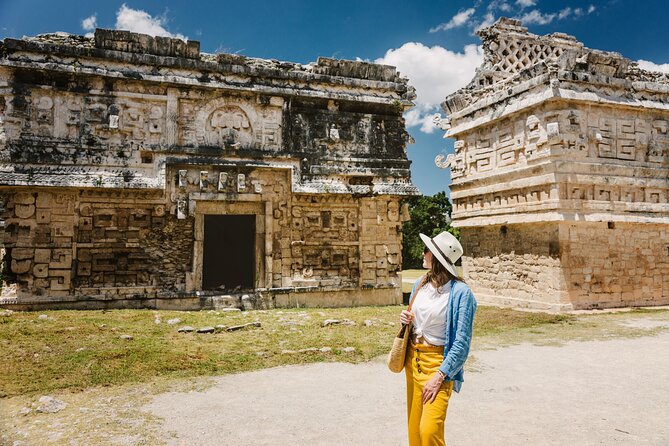
Then you finish with La iglesia, one of the most photographed buildings here. The exterior is described as almost completely covered with veneer decorations, including masks of Chac. The narration also points out that among the crowd of Chacs there are other animal figures such as an armadillo, a crab, a snail, and a tortoise.
This ending can be surprisingly satisfying, because the audio helps you notice things you would otherwise miss in a quick photo scramble.
Walking time, batteries, and the smart way to use the app
This tour is built for a walking route of roughly 2 miles over about 2 hours if you listen to everything, though you can go slower or faster. You also get shortcuts if you skip certain stories, so your total time can stretch into a 2 to 3 hour visit depending on breaks.
Here are the practical things that will make or break your day:
- Bring a portable charger. One review specifically noted battery drain.
- Plan for a lot of walking if you want to cover every structure.
- There are refreshment stalls and a sitting area in the middle of the compound, which is perfect for a rest and a phone recharge.
- Keep headphones in if you want the audio to match your position. The tour relies on location-based cues, and audio can begin before you reach the exact point.
Also, do not feel you must follow the route like a robot. The GPS is designed to help if you go off track to buy souvenirs or take extra photos. Just know that map alignment might be imperfect at times, so it is normal to do a quick “am I here?” check.
Finally, consider language. The tour is offered in English. If you need another language option, you may not have one, so plan accordingly.
Should you book this Chichén Itzá self-guided audio tour?
I think you should book if you want:
- Budget value compared to hiring a live guide
- Flexibility to explore without being tied to a group pace
- A GPS-driven way to understand major structures like El Castillo, the ball court, and El Caracol
- A tour you can repeat later thanks to lifetime access
I would skip it if:
- You need very deep, nuanced history at every stop, because the audio is meant to be concise and practical
- You are worried about phone battery or you rarely travel with a charger
- You rely on another language besides English and do not see a fit for your needs
If you do book, my top two advice pieces are simple: download on strong Wi‑Fi before you arrive, and bring a charger. With that done, this is one of the easiest ways to turn a crowded site into a calmer, more personal walk.
FAQ
Does the audio tour work offline at Chichén Itzá?
After you download the tour, it is designed to work offline using GPS alone, with no need for cellular or Wi‑Fi during the visit.
Is the Chichén Itzá entrance ticket included in the price?
No. The tour price does not include the entrance ticket to Chichén Itzá.
How long does the self-guided tour take?
It is listed as about 2 to 3 hours. The route is described as around 1 to 2 hours when you follow the plan and listen to the stories, depending on your pace and breaks.
Is this tour guided by a person?
No. It is self-guided. The app handles the audio narration based on your location, and there is no in-person guide meeting you at the start.
When should I download the app and enter the password?
You should download the tour while you have strong Wi‑Fi or cellular. After booking, you will receive instructions and a password by email and text.
What devices are recommended for GPS navigation?
It is recommended to use an iPhone with iOS 15 or later, an Android device with version 9 or later, or an iPad/tablet with GPS and cellular connectivity.
How does the audio start during the tour?
Once you open the app at the site and launch the correct tour, the audio is designed to play automatically when you reach each story point.
Do I need headphones?
Headphones are recommended for the best experience, since the tour is hands-free and relies on audio cues.
Is there free cancellation?
Yes. There is free cancellation up to 24 hours in advance for a full refund.
Can I use the tour more than once?
Yes. It is listed as new, lifetime access with no expiry, so you can use it on future trips as well.
More Guided Tours in Chichen Itza
More Tours in Chichen Itza
More Tour Reviews in Chichen Itza
Not for you? Here's more nearby things to do in Chichen Itza we have reviewed


Tour Reviews, compared.
 ★ 5.0Chichen Itza, Cenote, and Valladolid TourFrom $4524,293 reviews
 ★ 4.5Chichen Itza, Cenote & Valladolid Tour with Tequila and LunchFrom $3415,789 reviews
 ★ 4.6Chichen Itza, Cenote & Valladolid Tour with LunchFrom $496,722 reviews
 ★ 5.0Early morning Chichen Itza Tour: Cenote and Tequila TastingFrom $266,657 reviews
 ★ 5.0Private Roundtrip Transportation from Cancun Airport to Cancun Hotel ZoneFrom $945,086 reviews
 ★ 4.5Cancun ATV Jungle Adventure, Ziplines, Cenote and Tequila TastingFrom $494,873 reviews
 ★ 5.0Viator Exclusive: Tulum Ruins, Reef Snorkeling, Cenote and CavesFrom $1294,242 reviews
 ★ 4.5Chichen Itza Early Access All Inclusive: Hotel Pick up & All FeesFrom $1654,123 reviews
Browse the lists this tour appears in