
Tour review · TOUR REVIEWS
Chichen Itza: Tour with Expert Guide without lines!
Chichén Itzá clicks with a real guide. This English tour runs about 1 hour 30 minutes and focuses on the big sights, starting at El Castillo and ending at the Sacred Cenote, so you spend less time figuring out what to look for.
I love the tight pacing with a small group (up to 15), which makes questions easier and keeps the walk from dragging. I also like the photo support and on-the-spot explanations, including the kind of multimedia and photo-spot coaching you can get with guides like Russell (and Omar is another guide name you may see).
One possible drawback: the official entry fees are not included for foreigners, and that can change the real total cost more than you expect.
Key highlights you should care about
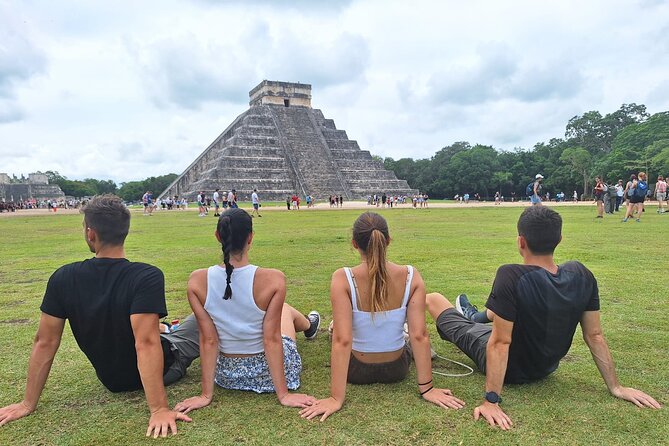
- El Castillo, Kukulkan, and the Maya calendar effects: Learn what you are seeing before you stand in front of it.
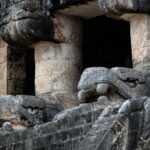
- Temple of the Warriors with warrior engravings and sacrifice context: You get the story behind the square-pillars.
- Gran Juego de Pelota acoustics: The ball court is famous for how sound behaves, not just its size.
- Sacred Cenote explained as a ritual portal: You understand why the Maya treated this “natural well” as sacred.
- Photos plus lockers: You can travel lighter and still leave with good shots.
- Max 15 people, shared guide: It stays friendly, not chaotic.
Why this Chichén Itzá tour works (even if you are short on time)

Chichén Itzá is one of those places where reading a sign helps, but a guide helps more. The ruins are impressive, yet the real wow factor is when you understand what you are looking at and why it mattered to the Maya.
This is a shared tour with a max of 15 people, and that matters. In a group that small, your guide can manage the flow without losing everyone, and you do not feel like you are being herded through a checklist.
The other thing I like is the focus on the highlights in a compact route. You get El Castillo, the Temple of the Warriors, the Great Ball Court, and the Sacred Cenote in about 1 hour 30 minutes total. That is a great match for travelers who want the essentials without turning the day into a marathon.
You can also read our reviews of more guided tours in Chichen Itza
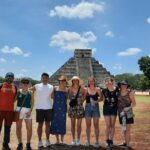
Where you meet and how the site flow is handled
You redeem your ticket at the Guías Oficiales Chichén Itzá Certificados, Zona Arqueológica Chichén Itzá Piste, 97751 Chichén Itzá, Yuc., Mexico. The activity ends back at that same meeting point, so there is no mystery about how you get back.
The tour includes lockers, which is a big practical win at archaeological sites. You can stash bags you do not need, keep valuables safer, and move more comfortably between stops.
It is also offered in English, and you should expect a shared expert guide rather than a private escort as the default. If you want more one-on-one time, the option for a private tour exists, and that is a smart upgrade when you have questions or photos you really want to nail.
Stop 1: El Castillo and the Kukulkan temple calendar
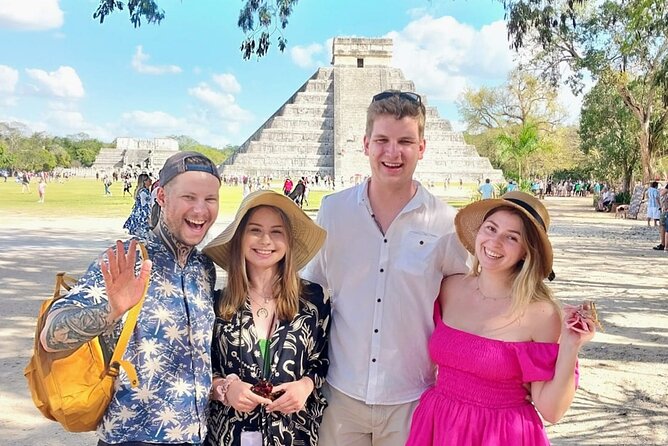
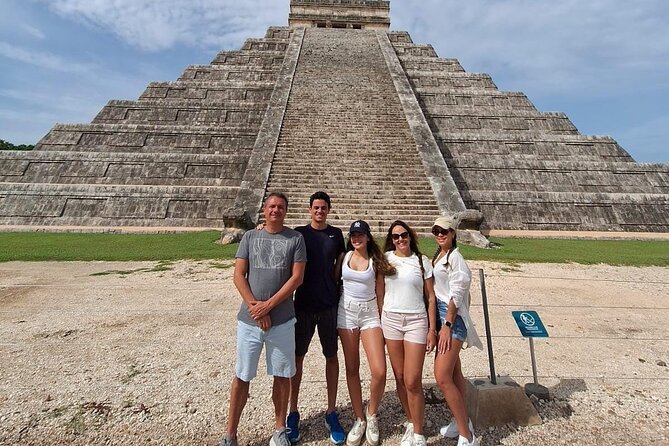
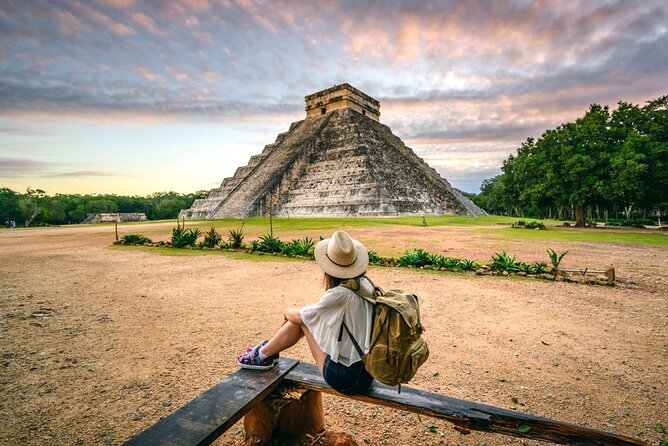
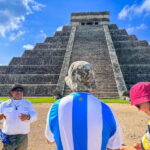
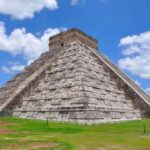
You start at the main entrance and head straight to El Castillo, also tied to the Kukulkan temple. This is the most emblematic, imposing structure on the site, and it is one of the best-known “postcard ruins” for a reason.
The guide spend about 30 minutes here. That time is not wasted. Instead of you just looking up at a steep staircase, you get explanations that connect the architecture to astronomy and to a kind of 3D calendar effect people associate with the structure.
Two things I find especially useful at El Castillo:
- You learn what details mean before you move, which makes the whole building feel less random.
- You get a chance to stand in more than one spot for photos, without feeling rushed.
In the experience, the guide also helps with photography. Some guides are known for pointing out photo spots and posing ideas, which makes a difference because El Castillo is tall, and angles matter.
Practical note: you will want to keep your phone handy, but also keep your footing. The area is busy, and you do not want to trip when you are trying to frame a perfect shot.
Stop 2: Temple of the Warriors and the square-pillars
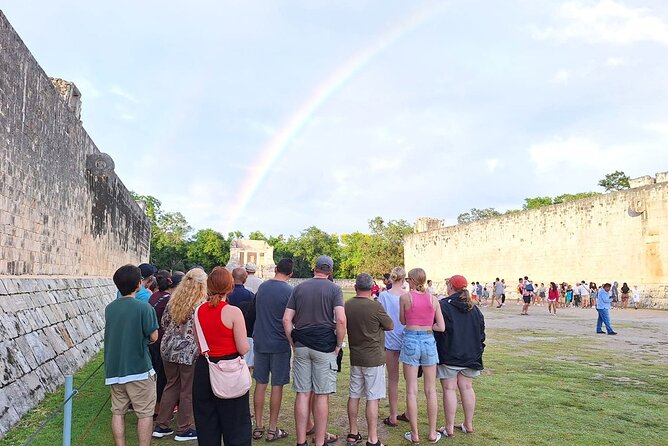
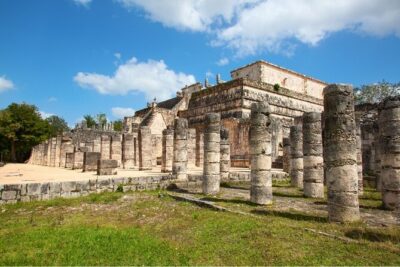
Next up is the Temple of the Warriors, about 20 minutes. This is the stop where the ruins shift from “big famous pyramid” to “close-up detail that tells a darker story.”
The key visual is the square pillars covered with engravings of warriors. The guide also frames the site as connected to war and human sacrifice, which is part of the historical context you cannot ignore if you want the real meaning of the architecture.
A balanced way to experience this stop is to let the guide do the explaining, then look for the patterns in the carvings. When you understand what the motifs are saying, the stone stops looking decorative and starts looking communicative.
Potential consideration: this is the most intense thematic stop. If you prefer a lighter, purely aesthetic visit, you might want to mentally brace for the subject matter and trust the guide to handle it respectfully.
Stop 3: Gran Juego de Pelota, size and the sound trick
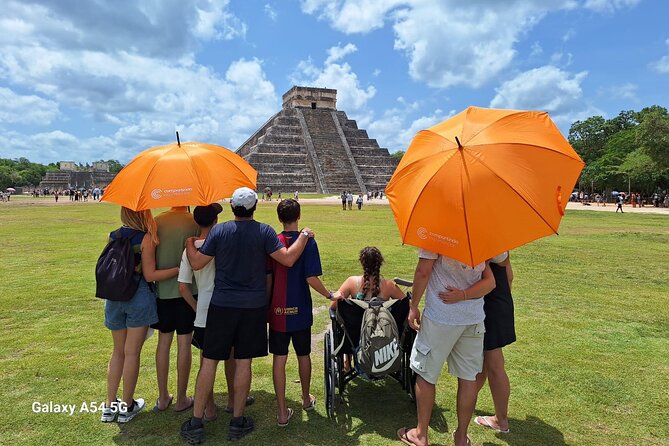
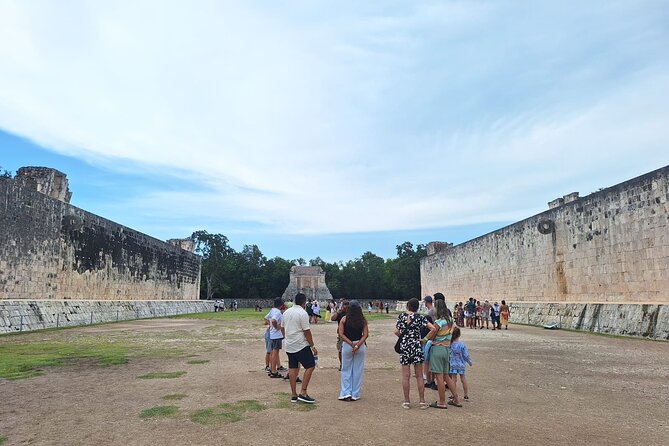
After that comes the Gran Juego de Pelota, the big ball court stop. You get about 20 minutes here.
This ball field is considered the largest in Mesoamerica, and it is easy to miss that scale if you are only watching from one angle. The guide helps you orient yourself and brings attention to the court’s acoustics, which is a big part of why people remember this place.
Here is what you should do during this stop:
- Listen for the way sound behaves when you stand in the right place.
- Look at the shape and walls, not just the open playing space.
- Take a few photos, but do not crowd the viewpoint.
Because the time window is short, this stop is best when you keep it simple. Let the guide show you where the sound and lines of sight matter, then you can enjoy the experience without turning it into a technical experiment.

Stop 4: Sacred Cenote, ritual water and the underworld idea
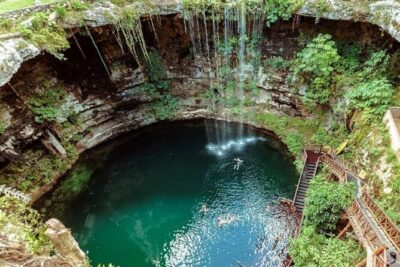
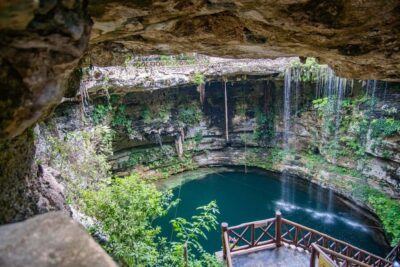
Your final major stop is the Sacred Cenote, also about 20 minutes. This is a natural well that the Maya treated as sacred.
The guide frames it as a portal to the underworld, and you learn that it was used for religious rituals and offerings, including sacrifices. The explanation is tied to the idea of communication with gods of the underworld.
I like this stop because it changes how you think about the site. Chichén Itzá is not only architecture. It is also spirituality tied to place. When you understand the cenote role, El Castillo and the other ritual spaces start to feel like parts of one system rather than separate landmarks.
What you should expect: you will get guided context and a clear sense of why this spot was important. You are not there to swim or party. It is a meaning-focused finale.
Price and value check, including the official entry fees
The tour price shown is $25.26 per person and the duration is about 1 hour 30 minutes. That is a low base price for a guided walk through multiple key sites.
But here is the part you must budget: the entrance fee is not included for foreigners. The foreign ticket is listed as MX$696.00 per person. There is also a different national ticket for people with Mexican ID (INE), listed as MX$315.00 per booking. Those are real-world costs you need to plan for.
Parking is also not included. Parking is listed as MX$100.00 per booking.
Now, what makes the tour feel like good value anyway?
- You are paying for a certified expert guide for the major stops in a tight route.
- You get photos during the tour, plus lockers so you travel more comfortably.
- The tour includes a ticket for children under 13.
- There is also a nursing service listed as included, which you will only notice if you need it, but it is still a nice-to-have.
If you are traveling on a budget, the difference between “tour price” and “total day cost” comes down to that foreign entry fee. Once you add that, the guide component becomes the deciding factor. If you care about understanding what the ruins mean, a guided structure like this is usually worth it.
How to reduce waiting and stress at arrival
Even if the tour is sold as without lines, the reality at Chichén Itzá is that timing helps. The smoother experience usually happens when you arrive early and let the site machinery work while you are already in motion.
A useful practical tip: if you are coming from Cancún or Tulum, remember the time shift. Those areas can be one hour ahead of Chichén Itzá, so your internal clock may lie to you. Arrive with that in mind so you do not show up earlier than you meant to, or later than you planned.
Parking advice is pretty straightforward. Getting there early can put you in a better position for the official parking lot, which is listed at MX$100. If you arrive later, you might find more informal options around you, and prices can vary.
Once inside, ticket lines can be shorter early in the day. When the day warms up and crowds swell, things can slow down. This is why a guided, timed route is useful. It gives your day shape.
What the guide actually adds, beyond facts
A good guide is not only a walking encyclopedia. It is someone who helps you interpret the place in front of you, then helps you capture it in photos without frustration.
In this tour, that can show up in small things:
- Explaining the astronomy and the calendar associations at El Castillo, so the structure feels like a message, not just a shape.
- Highlighting what to look for on the Temple of the Warriors pillars, so the carvings feel legible.
- Calling your attention to the ball court acoustics, so you do not miss the experience that makes it famous.
- Explaining the Sacred Cenote’s role in offerings and sacrifices, so you end with understanding, not just a “well in the ground.”
If you get Russell as a guide, you might see extra care for photo spots and multimedia support on a tablet. If you get Omar, you might notice the same pattern of enthusiasm and clear explanations that make the ruins feel alive.
Because this is a shared tour, you should also accept that your guide is juggling timing with a few moving parts. If you want maximum attention, the private option is worth considering.
The small details that make the day easier
You might think the tour would feel rushed, but the structure is built to keep stops short enough to cover the highlights without dragging you through endless rooms.
You have:
- 30 minutes at El Castillo
- 20 minutes at Temple of the Warriors
- 20 minutes at Gran Juego de Pelota
- 20 minutes at Sacred Cenote
That means you can enjoy each place instead of trying to “beat” the whole site in one go.
Also, there are lockers included. So bring what you need, then stash the rest. Less stuff means fewer hassles and better movement.
Finally, keep an eye out for vendors inside the park if you want souvenirs. There can be lots of art and items around. The good approach is to browse, ask for fair pricing, and decide quickly. If you want to avoid stress, set a budget before you walk in.
A smart add-on if you are driving through the region
If you have your own car and you are traveling on the route from Tulum, you might find that Coba makes a good stop on the way back. Climbing the Coba temple gives jungle views, and it is a great contrast to Chichén Itzá’s more famous monumental core.
A practical heads-up from local planning: the last time up the temple can be around 3:30 p.m. Also, the walk or short ride from the entrance to the big temple can be about 2 km. If you are already committed to Chichén Itzá, this add-on can work, but watch your energy.
Should you book this Chichén Itzá guided tour?
Book it if:
- You want the major sights in about 1.5 hours.
- You prefer explanations in English rather than trying to piece it together yourself.
- You care about photos and want help finding the best spots.
- You like small-group pacing, with a max of 15 people.
Skip it or consider a different approach if:
- You are comfortable going solo and do not care about deeper context for the carvings and ritual spaces.
- You are counting every peso and you know you will also need to budget the foreign entry fee (MX$696) plus possible parking.
My simple rule: pay for the guide if you want the ruins to make sense as you walk. If you only want the quick skyline of pyramids and you are fine reading a few signs, you might not need a guided structure.
FAQ
How long is the Chichén Itzá tour?
The tour lasts about 1 hour 30 minutes and ends back at the meeting point.
What stops are included?
The tour visits El Castillo (about 30 minutes), the Temple of the Warriors (about 20 minutes), the Gran Juego de Pelota ball court (about 20 minutes), and the Sacred Cenote (about 20 minutes).
Is the tour offered in English?
Yes, the tour is offered in English.
What entrance fees are not included?
Entrance fees are not included. The foreign ticket is listed as MX$696.00 per person, and the national ticket for Mexican ID (INE) is listed as MX$315.00 per booking.
Is parking included?
No. Parking is listed as MX$100.00 per booking.
Can I cancel for free?
Yes. You can cancel for a full refund if you cancel at least 24 hours before the experience starts. If you cancel less than 24 hours before, the amount paid is not refunded.
More Guided Tours in Chichen Itza
More Tours in Chichen Itza
More Tour Reviews in Chichen Itza
Not for you? Here's more nearby things to do in Chichen Itza we have reviewed

Tour Reviews, compared.
 ★ 5.0Chichen Itza, Cenote, and Valladolid TourFrom $4524,293 reviews
 ★ 4.5Chichen Itza, Cenote & Valladolid Tour with Tequila and LunchFrom $3415,789 reviews
 ★ 4.6Chichen Itza, Cenote & Valladolid Tour with LunchFrom $496,722 reviews
 ★ 5.0Early morning Chichen Itza Tour: Cenote and Tequila TastingFrom $266,657 reviews
 ★ 5.0Private Roundtrip Transportation from Cancun Airport to Cancun Hotel ZoneFrom $945,086 reviews
 ★ 4.5Cancun ATV Jungle Adventure, Ziplines, Cenote and Tequila TastingFrom $494,873 reviews
 ★ 5.0Viator Exclusive: Tulum Ruins, Reef Snorkeling, Cenote and CavesFrom $1294,242 reviews
 ★ 4.5Chichen Itza Early Access All Inclusive: Hotel Pick up & All FeesFrom $1654,123 reviews
Browse the lists this tour appears in