
Tour review · TOUR REVIEWS
Scuba Diving Under Water Museum and Reef for beginners
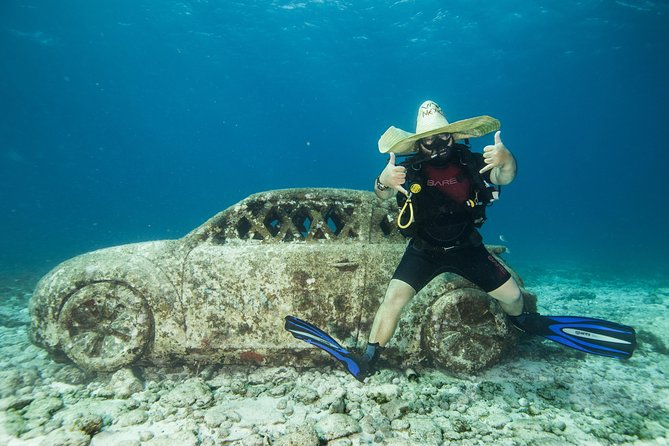
First-timers, this is scuba training that feels organized. You start with a PADI lesson built for beginners, then you go see the Museo Subacuatico de Arte (MUSA) sculptures and the Manchones Reef during two open-water underwater sessions. What I like most is the steady, hands-on pace, and the fact that you’re not just learning gear, you’re also looking at real underwater art and marine life.
One thing to think about: the advertised price does not cover every single fee. You should budget for add-ons like the national marine park entrance fee, pool class fee, and possible wetsuit rental.
Key things to know before you go
- Discover Scuba setup (no certification needed): You get instruction designed for brand-new underwater explorers.
- Small groups, real attention: Maximum of 16 travelers, with a focus on safety and comfort.
- Pool practice before the sea: You do a relaxed pool session so your breathing and skills get comfortable first.
- Two major sites: MUSA (500+ sculptures) plus Manchones Reef for first-time reef spotting.
- Gear and instruction are included: Scuba gear, theory class, and a certified PADI instructor.
- Plan for separate fees: Marine park entrance, pool class fee, and wetsuit rental may cost extra.
Coconut Divers Cancun: where beginner comfort starts
The whole experience is built around getting you calm, not rushed. You meet at Coconut Divers Hotel and marina Sotavento, right along the Hotel Zone corridor, which makes it easier to fit into a Cancun morning. The start time is 8:00 am, and the full outing runs about 5 hours before you head back to the meeting point.
The company keeps group size capped at 16, and that matters more than people think. In practical terms, smaller groups mean you spend less time waiting, and instructors can notice when your breathing, buoyancy, or confidence level needs a pause.
Also, this is a Discover Scuba program, not a certification grind. That changes the vibe. You are there to learn how to breathe underwater safely and have fun seeing what’s down there.
You can also read our reviews of more museum experiences in Cancun
The training flow: theory, pool skills, then the ocean
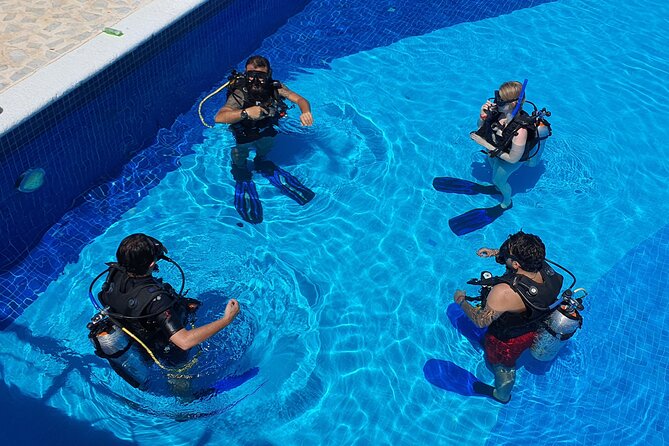
You do not jump straight into open water. You start with a theory class and then you practice in a pool session. That sequence is smart because scuba is mostly controlled breathing and calm body position. Once you understand what to do, the pool becomes the place where you can try without the extra distractions of waves, saltwater, and distance.
During the pool session, your instructor will walk you through basics and help you practice underwater breathing. The best part is that the training focus is on confidence. A lot of first-timers worry about panicking, so the instructors are aiming to make the process feel familiar before you’re out on the water.
Then you transition to the sea for two open-water underwater sessions. You’ll be suited with scuba gear, coached during the process, and kept in a safe routine so you can actually enjoy what you came for.
Pool session expectations, and why timing can feel short
The pool part is designed to be relaxed. You’ll practice the basics and get your bearings on equipment and breathing. I like this approach because it reduces the chances of your first big underwater moment turning into a stress test.
That said, the pool session is not necessarily long compared to what some people imagine. If you’re the kind of traveler who wants lots of repeated practice, know that the plan is structured: pool first for key skills, then you move on. If you need more time, the best move is to say so right away and ask for extra practice items before you head to the boat.
If you’re bringing kids, I strongly suggest you plan for any medical requirements in advance. One parent tip I found useful was to bring a medical permit to dive with kids, just in case. Better to be prepared and unbothered than scrambling later.
MUSA at Cancun: 500+ sculptures you see slowly, not fast
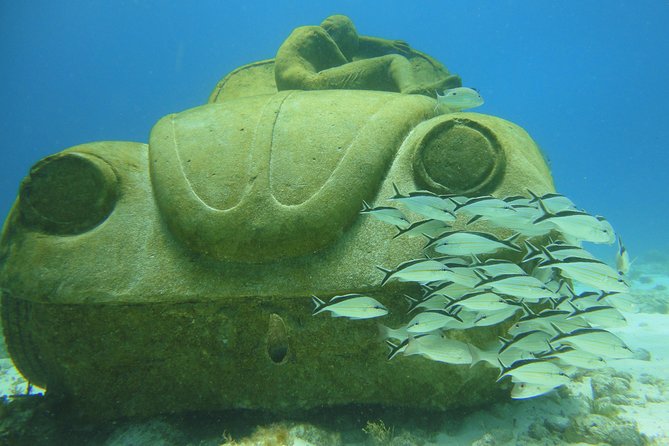
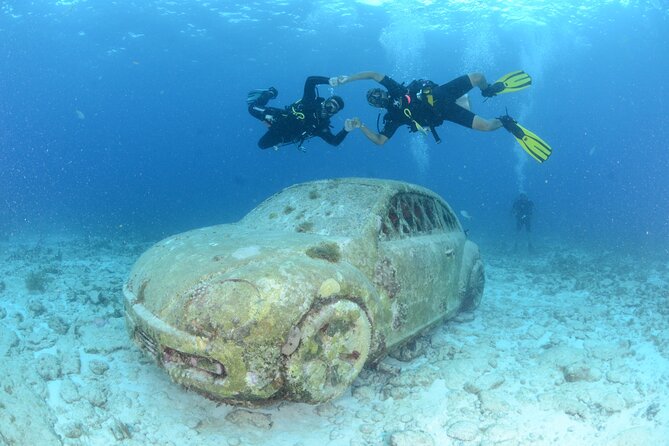
The first major underwater stop is the Museo Subacuatico de Arte, known as MUSA. This is not a reef-only experience, and that’s why it’s so great for beginners. Sculptures give you something to look at that is easy to orient around. You’re not just chasing fish through moving water.
MUSA is one-of-a-kind because it’s an underwater art museum. Over time, it has become a kind of habitat too, which adds interest beyond the art itself. For you as a first-timer, that means your underwater attention has a natural target. You can take your time, look at shapes, and get used to staying steady.
One practical tip: when you’re learning, it’s tempting to stare straight at the nearest sculpture. Instead, glance around for the big picture, then come back to details. It helps your buoyancy because you’re not constantly pivoting your body.
Manchones Reef: a first-reef swim with real marine life
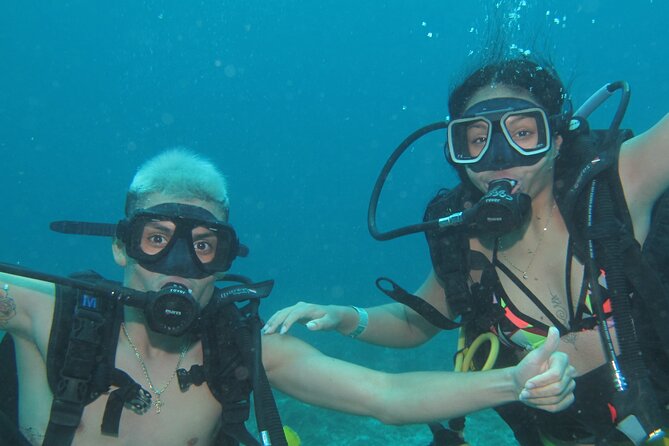
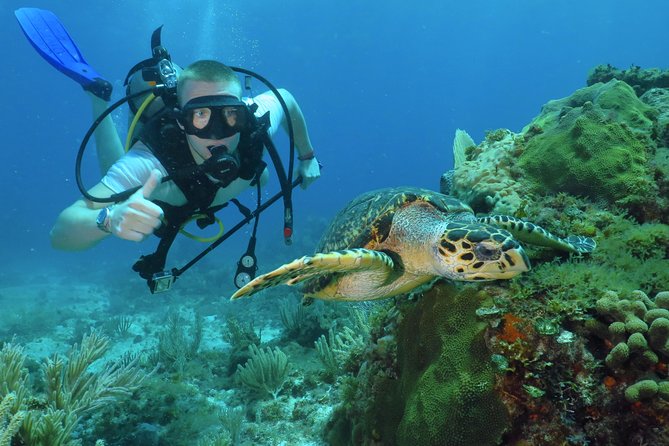
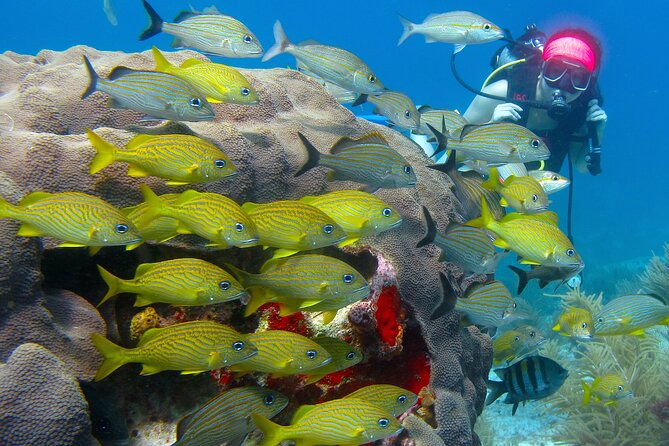
After MUSA, you head to Manchones Reef. This is the part where the underwater world starts feeling alive in a more traditional way. Reefs tend to offer lots of natural sights, and for beginners that’s a good thing because you don’t have to search hard.
Manchones Reef is described as a vibrant coral reef, which means you should expect plenty of marine life opportunities for first-timers. The goal here is comfort. You want to enjoy seeing fish and other reef creatures without feeling like you have to perform.
The buoyancy skills you practiced in the pool pay off here. If you stay stable, you can watch more calmly. If you keep adjusting, you’ll spend your energy fighting your position instead of enjoying what’s around you.
You can also read our reviews of more scuba diving tours in Cancun
How the boat day runs: pace, safety, and instructor support
A lot of the best feedback ties back to one thing: instructors stayed close, explained clearly, and emphasized safety. That matters because scuba is technical, even when you’re having fun.
You might be paired with different staff depending on your day. Names I saw pop up repeatedly include Arthur, Alex, Gonzalo, Ulysses, and Ricardo, plus other team members like Poncho. What connects them in the feedback is the same theme: they keep the process simple, walk you through emergency basics, and don’t treat first-timers like a burden.
For you, that’s the real value. When you trust your instructor, you stop thinking about gear and start thinking about what you’re seeing.
Also, the captain and crew support can be a big factor. Some first-timers get seasick, even with calm water. When that happens, having a captain and staff who manage the situation without panic is a huge plus. Plan to tell your instructor early if you feel off, especially if you’re prone to motion sickness.
Gear, water, and small comfort details that add up
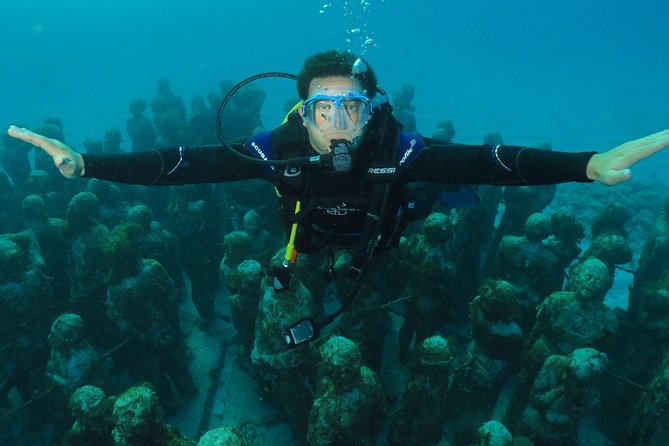
The tour includes scuba gear, purified drinking water, and a PADI instructor, plus the theory class. That’s helpful because you don’t need to rent everything separately to get started.
Still, check what you personally need. Wetsuit rental is listed as an extra cost, and some people may prefer it for comfort depending on temperature and exposure time. If you run cold easily, you’ll probably be happier renting rather than skipping.
Also consider personal comfort items even if the tour does not list extras like towels or snacks. One helpful practical point from the feedback: plan to eat before you arrive because you may return hungry. I’d rather be “slightly over-prepared” than stuck on the beach thinking about lunch.
Price and value: what $119 covers, and what to budget for
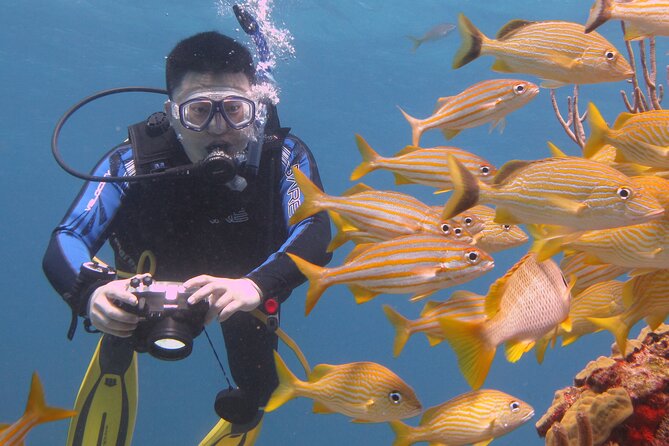
The listed price is $119 per person, and that’s the starting point. For your money, you’re covering training plus the major underwater experiences.
Here’s what’s included:
- scuba gear
- theory class
- PADI scuba instructor
- two open-water underwater sessions
- purified drinking water
Here’s what may cost extra:
- National marine park entrance fee: $20 per person
- Pool class fee: $20 per person
- Wetsuit rental: $10 per person
In other words, the real cost is more than the headline price. If you budget only $119, you may feel surprised on arrival. I recommend you mentally “top up” your budget for those separate fees so you can relax and focus on the experience.
One more budgeting reality: some people reported an additional per-person charge upon arrival, and they noted it was shown in their reservation info. That doesn’t mean something is wrong. It just means your final total may not match the first number you see.
If you want best value, show up early enough to get ready without rushing. When you start calm, the day goes smoother.
Your best fit: who this beginner scuba experience suits
This program is designed for beginners who want to experience scuba without needing certification. It’s a good match if:
- you want a structured intro with pool practice
- you like small groups and close instructor attention
- you want both underwater art and reef life, not just one type of sight
It can also work well for families, including older kids and teens, as long as you’re ready to handle any medical documentation they might require. If you’re bringing kids, I’d also make sure everyone understands that pool practice is the foundation for being comfortable later.
You might want to think twice if:
- you strongly dislike early starts
- you have a very low tolerance for seasickness or motion, since you’ll be on a boat as you travel between sites
- you expect lots of long pool repetition and not just the essentials
Practical tips so you feel confident on day one
I’d give you three simple game plans.
First, communicate early. Tell your instructor if you’re nervous, if you wear contacts, or if you’re prone to seasickness. Small details change how your instructor coaches you.
Second, protect your basics. Keep your mask fitted and treat buoyancy like a slow skill, not a fast adjustment. If you rush your movements, you’ll feel more out of control.
Third, plan for comfort on the return. Some people come back hungry and cold, especially if the day runs long and you don’t bring snacks or keep warm. Even if you cannot bring certain items, you can still manage with a warm layer and a realistic attitude about timing.
Should you book this Cancun beginner scuba experience?
Yes, if you want a beginner setup that’s focused on confidence, safety, and two memorable underwater settings. The mix of PADI-style coaching, a pool warm-up, and the chance to see MUSA plus Manchones Reef is a strong value for your time in Cancun.
Book it especially if you like structured learning instead of freestyle chaos. And before you go, budget for the extra listed fees, because that’s the one place the day can surprise you.
If you want me to help you decide, tell me your age range (and whether anyone is prone to seasickness), plus what you care about most: underwater art, marine life, or feeling calm and supported.
FAQ
Do I need scuba certification for this experience?
No. This is a Discover Scuba program designed for beginners and it does not require certification.
What is included with the $119 price?
It includes scuba gear, a theory class, a PADI scuba instructor, purified drinking water, and two open-water underwater sessions.
What extra fees should I expect to pay in addition to the $119 price?
You should plan for the national marine park entrance fee of $20 per person, a pool class fee of $20 per person, and wetsuit rental of $10 per person.
How long does the experience take?
It is about 5 hours total.
How big is the group?
The tour/activity has a maximum of 16 travelers.
Where do we meet, and when does it start?
The meeting point is Coconut Divers Hotel and marina Sotavento, Blvd. Kukulcan Km 4.0, Kukulcan Boulevard, Zona Hotelera, 77500 Cancún, Q.R., Mexico. Start time is 8:00 am, and it ends back at the meeting point.
What happens if the weather is bad?
This activity requires good weather. If it is canceled due to poor weather, you’ll be offered a different date or a full refund, and you’ll coordinate with the team.
More Scuba Diving Tours in Cancun
More Museum Experiences in Cancun

More Tour Reviews in Cancun



Not for you? Here's more nearby things to do in Cancun we have reviewed









Tour Reviews, compared.
 ★ 5.0Chichen Itza, Cenote, and Valladolid TourFrom $4524,293 reviews
 ★ 4.5Chichen Itza, Cenote & Valladolid Tour with Tequila and LunchFrom $3415,789 reviews
 ★ 4.6Chichen Itza, Cenote & Valladolid Tour with LunchFrom $496,722 reviews
 ★ 5.0Early morning Chichen Itza Tour: Cenote and Tequila TastingFrom $266,657 reviews
 ★ 5.0Private Roundtrip Transportation from Cancun Airport to Cancun Hotel ZoneFrom $945,086 reviews
 ★ 4.5Cancun ATV Jungle Adventure, Ziplines, Cenote and Tequila TastingFrom $494,873 reviews
 ★ 5.0Viator Exclusive: Tulum Ruins, Reef Snorkeling, Cenote and CavesFrom $1294,242 reviews
 ★ 4.5Chichen Itza Early Access All Inclusive: Hotel Pick up & All FeesFrom $1654,123 reviews
Browse the lists this tour appears in